
To transport a portable generator, turn it off and let it cool for at least 15 minutes, close the fuel valve and the fuel cap vent, and keep it upright. Then strap it down in a truck bed or on a trailer so it can’t slide or tip. Never lay a generator on its side, and don’t carry one with fuel in it inside a car’s passenger area, where gas fumes can build up.
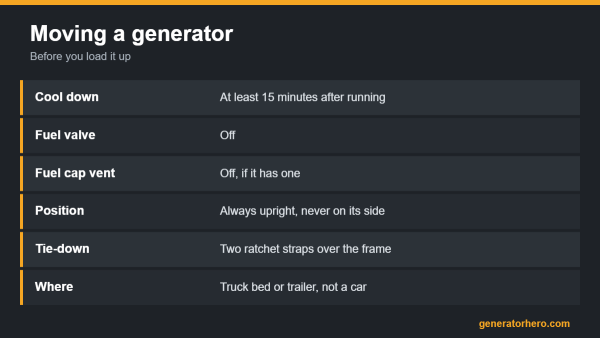
How to transport a generator safely
- Shut it off and let it cool. Honda’s EU2200i manual says to let a generator that’s been running cool for at least 15 minutes before loading it. The muffler and engine stay hot enough to burn you or melt things around them.
- Close the fuel valve and the cap vent. Turning the fuel off keeps gas from flowing into the carburetor and crankcase on bumpy roads. If your fuel cap has a vent lever, turn it off to stop spills.
- Keep it upright. Honda’s manual says not to lay the generator on its side when moving, storing or operating it. Tipping it can leak fuel and push oil where it doesn’t belong, which can cause hard starting and smoke.
- Use a truck bed or trailer. Put the generator against the front of the bed or trailer, on a rubber mat if you have one.
- Strap it down. Use two ratchet straps to tie-down points, crossing over the frame rather than the plastic panels or handles. Shake it to make sure it doesn’t move.
- Don’t stack anything on top. Heavy items can crack covers and damage controls.
Can you put a generator in a car or SUV?
It’s best not to. A generator with fuel in it can release gasoline vapors inside the vehicle, and a loose generator can hurt someone in a sudden stop. If you have no other choice, use a small inverter generator with the tank drained and run dry, keep it upright and secured, and open a window. A truck bed or trailer is the better option.

Transporting a generator for camping or RVing
- Carry it in the truck bed, on a hitch cargo carrier with a locking strap, or in an exterior RV storage bay that’s vented and sealed from the living space.
- Carry gasoline in an approved can, secured upright outside the passenger area. Don’t overfill the generator before a long drive.
- Lock it to the carrier or truck. Generators are a common theft target at campgrounds. Here are our generator theft prevention tips.
Transporting a generator to a job site
For daily use, a generator mounted to a trailer or truck rack with bolts or a locking bracket is safer than strapping it down every day. Check the mounts and straps before each trip, and keep the fuel valve closed while driving.
Related guides: How to Clean Your Generator in 11 Easy Steps, 8 Generator Maintenance Tips for safe extended use and How to Break In a New Generator.
FAQ
Can you transport a generator on its side?
No. Manufacturers say to keep generators upright. Laying one down can spill fuel and send oil into the air filter or cylinder.
Should I drain the gas before transporting a generator?
For a short trip in a truck bed, closing the fuel valve and the cap vent is usually enough. For long trips, shipping or carrying it inside a vehicle, drain the fuel or run it dry first.
Can you run a generator in a truck bed?
Some people do, in an open truck bed with the exhaust pointed away from the cab and any people. Never run it under a camper shell or tonneau cover, because carbon monoxide can build up. Follow your manual.
Can I move my generator while it’s running?
No. Turn it off first. Moving a running generator risks burns, fuel spills and damage to the engine.
Related: how far a generator should be from your house and how to winterize a generator.