
A low oil sensor is a float switch inside the engine’s crankcase. When the oil level drops too low, it grounds the ignition and shuts the engine off, which protects the engine from seizing. If your generator won’t start or keeps shutting down even though the oil is full, the cause is usually that the generator isn’t sitting level, the oil level is wrong, or the sensor is stuck or faulty. You can temporarily bypass a faulty sensor by unplugging its wire, but only after you’ve confirmed the oil level with the dipstick, and only until you replace the sensor.
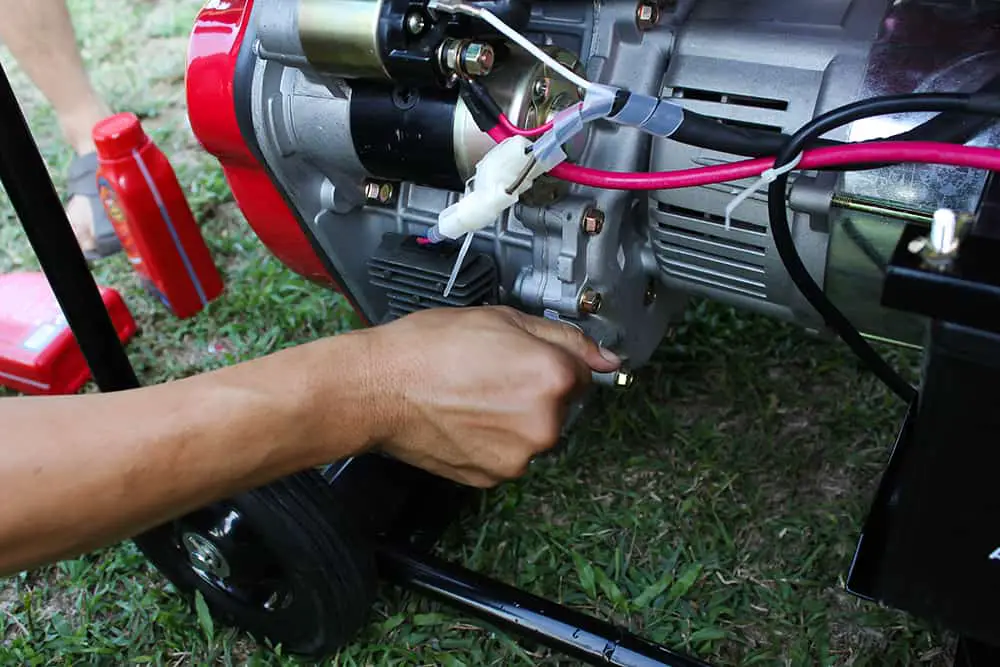
How the low oil sensor works
Most portable generators have a small float switch mounted inside the crankcase. As long as there’s enough oil, the float stays up and the switch stays open. When the oil drops, the float falls, the switch closes and it grounds the ignition (kill) circuit. The engine stops, or won’t start at all. Many generators also turn on an oil warning light at the same time.
Note that the sensor measures oil, not fuel. A full gas tank has nothing to do with it.
Why the sensor trips when the oil is full
- The generator isn’t level. This is the most common cause. On a slope, oil pools away from the float. Move the generator to flat, level ground and try again.
- The oil level is actually low or overfilled. Check it with the dipstick or fill plug with the generator level. Use the oil type and amount in your owner’s manual. Here’s our guide to what kind of oil a generator uses.
- The float is stuck. Sludge or old oil can make the float stick in the down position. An oil change sometimes frees it.
- A damaged wire. If the sensor wire’s insulation is worn and touching metal, it grounds the ignition just like a low-oil signal.
- The sensor has failed. Sensors are inexpensive parts and do wear out.
Step 1: Rule out the easy causes
- Turn the generator off and let it cool down.
- Move it onto flat, level ground.
- Check the oil level with the dipstick or fill plug. Top up or drain to the correct level.
- If the oil is dark or sludgy, change it.
- Try starting it again.
If it starts, you’re done. If it still won’t start, go through our common reasons a generator won’t start before blaming the sensor. A bad spark plug, old fuel or a clogged carburetor can look like a sensor problem.
Step 2: Test the sensor by bypassing it (temporarily)
Only do this after you’ve confirmed the oil is at the right level. Running a generator with low oil can destroy the engine in minutes, and bypassing the sensor may void your warranty.
- Turn the generator off, let it cool and disconnect the spark plug wire for safety while you work.
- Find the low oil sensor wire. It usually comes out of the crankcase near the bottom of the engine and runs to the ignition coil or control module. Your owner’s manual or a parts diagram for your model will show where it is.
- Unplug the sensor wire at its connector. Don’t cut it. Tuck the loose end so it can’t touch metal.
- Reconnect the spark plug wire and try to start the generator.
If it starts with the sensor unplugged, the sensor or its wire is the problem. Replace the sensor as soon as you can and plug it back in. Check the oil level by hand every time you refuel until you do.
If it still won’t start, the sensor isn’t the cause. Reconnect it and look at the fuel, spark plug and carburetor instead.
On many inverter generators, the oil sensor is wired through a control board instead of straight to the ignition coil. If you aren’t comfortable tracing the wiring, take it to a small engine shop or contact the manufacturer.
Step 3: Replace the sensor
Replacement low oil sensors are inexpensive and usually sold by the generator’s manufacturer or small engine parts stores. Order the part that matches your model number. Replacing it usually means draining the oil, removing the crankcase cover or sensor bolts, swapping the sensor and refilling the oil.
Keep it from happening again
- Always run the generator on level ground.
- Check the oil before every use and change it on schedule. See our generator maintenance tips.
- Break in a new generator properly. Here’s how to break in a generator.
FAQ
Is it safe to run a generator without the low oil sensor?
Only for a short test, and only if you’ve confirmed the oil level. Without the sensor, nothing will shut the engine off if the oil runs low, and the engine can seize.
Why does my generator shut off after a few seconds?
That’s a classic sign of the low oil sensor tripping, often because the generator isn’t level or the oil is low. Fuel and choke problems can also cause it. For Onan RV generators, see why an Onan generator starts then shuts down.
Can overfilling oil trigger the low oil sensor?
Usually not, but overfilling can cause smoking, oil leaks and hard starting. Fill only to the level marked in your manual.