
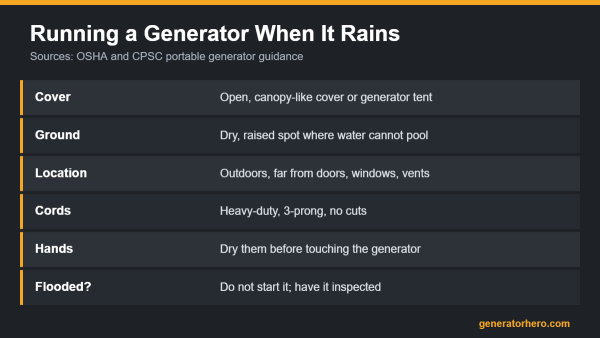
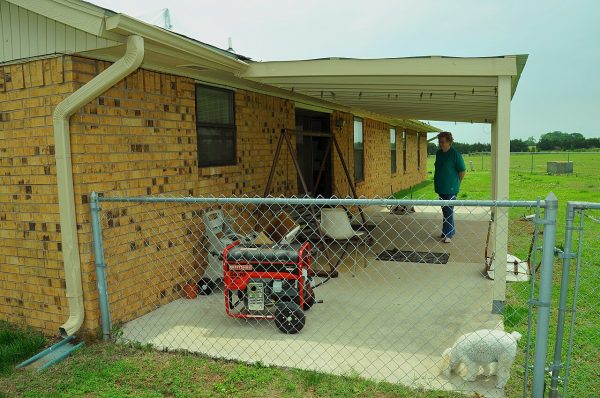
No, a portable generator shouldn’t get wet while it’s running. Generators produce household-level electricity, and water raises the risk of shock and electrocution. OSHA says to keep a generator dry and not use it in rain or wet conditions, and to protect it with a canopy if needed. The CPSC says to run it under an open, canopy-like structure on a dry surface where water can’t puddle or drain under it, and always outdoors, far from doors, windows and vents.
Why can’t a generator get wet?
Water and electricity are a dangerous mix. The outlets, control panel and alternator on a generator carry live current, and rain getting into them can cause a shock, a short circuit or damage to the generator. The CPSC’s portable generator safety alert warns that generators “pose a risk of shock and electrocution, especially if they are operated in wet conditions.”
The answer is not to move the generator inside. Running a generator in a garage, shed or porch, even with the door open, can kill you with carbon monoxide. It has to stay outdoors.
How to run a generator in rain or snow
- Use an open cover. A canopy, a purpose-made generator tent or a shelter with open sides keeps rain off while letting exhaust escape. See generator shelters you can build or buy.
- Set it on a dry, raised surface. Pick a spot where water won’t puddle or run under the generator, such as a paver pad or a small platform.
- Keep it far from the house. The CPSC says to run it outside and far from doors, windows and vents. Here’s how far a generator should be from your house.
- Keep cord connections dry. Use heavy-duty outdoor extension cords with three prongs and no cuts. Here’s how to choose generator extension cords.
- Dry your hands first. The CPSC says to dry your hands before touching the generator, and OSHA says never to handle a generator’s electrical parts if you’re wet or standing in water.
- Clear snow. Keep snow away from the air intake and exhaust, and don’t let it bury the generator.
What to do if your generator gets wet
- Turn it off and unplug everything, if you can do it safely without standing in water. Don’t touch it with wet hands.
- Let it dry completely. Move it to a covered, ventilated spot (not running) and give it time to dry. A fan helps.
- Check the outlets and panel for water, and wipe the outside dry.
- Check the oil and fuel. If the oil looks milky or there’s water in the gas, drain and replace it before starting.
- If it was flooded or submerged, don’t start it. OSHA says not to use electrical equipment that has been under water. Have a repair shop inspect it first.
If your generator won’t start after drying out, see why a generator won’t start.
Are generators waterproof?
No portable gas generator is waterproof. Some inverter models have enclosed housings that shed light splashes better than open-frame units, but the outlets and air vents still let water in, and every manufacturer says to keep the generator dry.
Use a GFCI
A ground fault circuit interrupter (GFCI) cuts power when current leaks out of its normal path, which is what happens when water gets involved. OSHA recommends GFCIs especially where equipment is used in or around wet or damp locations. Many newer generators have GFCI outlets built in; if yours doesn’t, use a GFCI-protected cord or adapter. OSHA’s portable generator fact sheet covers this and grounding.
Related guides: Best Generators for Hurricane Season, Stolen Generator and How to Protect Outdoor Extension Cord From Rain DIY.
FAQ
Can a generator get rained on?
Not while running. Cover it with an open-sided canopy or tent and keep it on dry ground.
Can a generator be stored outside?
Only under full cover that keeps rain and snow off. A shed or garage is better for storage, but never run it there.
Can I use my generator during a storm?
Yes, if it’s outside, covered with an open canopy, on dry ground and far from the house. If water is pooling around it, shut it down.
Can a generator get snowed on?
Light snow on the housing usually isn’t a problem, but keep snow off the outlets, intake and exhaust, and never let it bury the generator.